
Federal Inmate Release Paths
Federal custody is a system, not a verified Real County facility. No BOP institution was identified inside the county. A person may be held first by USMS in a contract jail, later designated to BOP, released under a federal court order, transferred to a state authority, or received by ICE. Each transition creates a record with a different custodian.
For a sentenced BOP inmate, the public locator ordinarily shows name, register number, age, race, sex, release date, and location or status. “Released” or “Not in BOP Custody” establishes that BOP no longer holds the person. BOP cautions that another criminal-justice entity may hold the person and federal supervision may continue. Read the result narrowly.
| Federal stage | Primary source | Release evidence |
|---|---|---|
| Pretrial or transport | Federal docket, USMS, contract jail | Court order and jail exit |
| Sentenced BOP custody | BOP Inmate Locator | Release status and date |
| Supervised release | Judgment and probation record | Term and conditions |
| Transfer to ICE or state | Receiving agency | New intake or custody record |
Confirm a Federal Inmate Release
Search the BOP Inmate Locator by register number when possible. It also accepts DCDC, FBI, or INS identifiers and a name search with age, race, and sex refiners. Match the register number and personal details before saving the status. Then note the exact wording, displayed release date, and retrieval date.
- Determine whether the person was in BOP custody or USMS pretrial custody.
- Search BOP by number, then by exact name if needed.
- Open the federal docket and read the detention, sentencing, and release orders.
- Identify the actual contract jail for any USMS period.
- Verify the next agency when the record shows a transfer or detainer.
Future BOP dates can change. BOP specifically warns that First Step Act credit recalculation may temporarily affect projected dates. Recheck rather than treating a future date as fixed. For a past release, the displayed release date is useful, but the judgment and docket are needed to understand supervision, remand, or another sovereign's custody.
Federal Release Records Contact
The public BOP locator is the first route for sentenced inmates from 1982 to the present. For the historical document behind a result, use BOP's Freedom of Information Act channel. A focused request should identify the full name, register number, date of birth, approximate custody dates, and requested record. Ask for incarceration location history, actual release date and type, releasing institution, and destination when releasable.
Online Inmate Locator
bop.gov/inmateloc
Historical records: BOP FOIA
Facility varies by designation
USMS manages prisoners from arrest through transfer or designation, often using contract jails. It offers no public historical released-inmate locator comparable to BOP. Use USMS prisoner-operations contacts or FOIA, but anchor the request in the case number, district, date range, and known holding facility. The contract jail may hold the actual gate record.
The U.S. District Court for the Western District of Texas places Real County within the San Antonio Division. That fact helps locate a likely docket, but it does not prove that every federal matter involving a Real County resident was filed there. Search by defendant and case number, then confirm jurisdiction from the docket itself.
BOP and USMS Custody
BOP and USMS perform different roles. BOP houses many people serving federal sentences. USMS handles federal prisoners during arrest, court appearances, detention, transport, and designation. A person can therefore be in federal custody without appearing as an active BOP inmate. Conversely, a historic BOP result may remain searchable after release.
A Real County Sheriff record marked transfer to USMS is only the first link. Obtain the county transfer time and destination, then match the federal court detention order and contract-jail intake. If the person later enters BOP, the register number and institution history continue the chain. If the court orders release before BOP designation, the docket and contract-jail exit may be the best evidence.
Absence from a wanted-person page has no release meaning. Wanted lists serve a different function and do not document ordinary detention histories. Likewise, disappearance from a county roster proves neither federal intake nor community release.
Real County Federal Court Record
The docket supplies the legal sequence that a locator compresses. Request or retrieve the complaint, initial appearance, detention or release order, plea, judgment, sentence, commitment, supervised-release term, revocation filings, and later custody orders. Compare dates with the Real County transfer and the holding facility's exit.
A judgment can impose supervised release after imprisonment. That person is outside prison but remains under federal court supervision. A later revocation can return the person to custody. A docket can also show remand to another authority or an immigration consequence. These entries explain why a BOP “Released” result is not the end of the inquiry.
Use the full case number and register number across requests. Same-name mistakes are common, especially when one public result omits the underlying offense or county link. Birth details, identifiers, sentencing court, and custody dates should agree before records are combined.
Note: A federal docket explains the legal authority, while the holding agency documents the physical custody event.
Federal Release to ICE
A federal release can flow directly into immigration custody. If BOP or a contract jail records an ICE transfer, search the ICE Online Detainee Locator System. Use the exact nine-digit A-number with country of birth, or first and last name with country of birth and date of birth. A missing result can reflect spelling, delayed data, or locator limits.
Contact the relevant Enforcement and Removal Operations field office when ODLS does not resolve the case. Keep the BOP or jail exit timestamp because it establishes when federal criminal custody ended, but seek an ICE release record or immigration case document to establish when ICE custody ended. The two events are not interchangeable.
No ICE detention center was verified inside Real County. A transfer from Real County to USMS and later to ICE may involve several distant facilities. Follow documented agency handoffs rather than assuming the person stayed near Leakey.
BOP Released Status Display
The official BOP Inmate Locator provides the federal search form and system-specific status used for sentenced inmates.
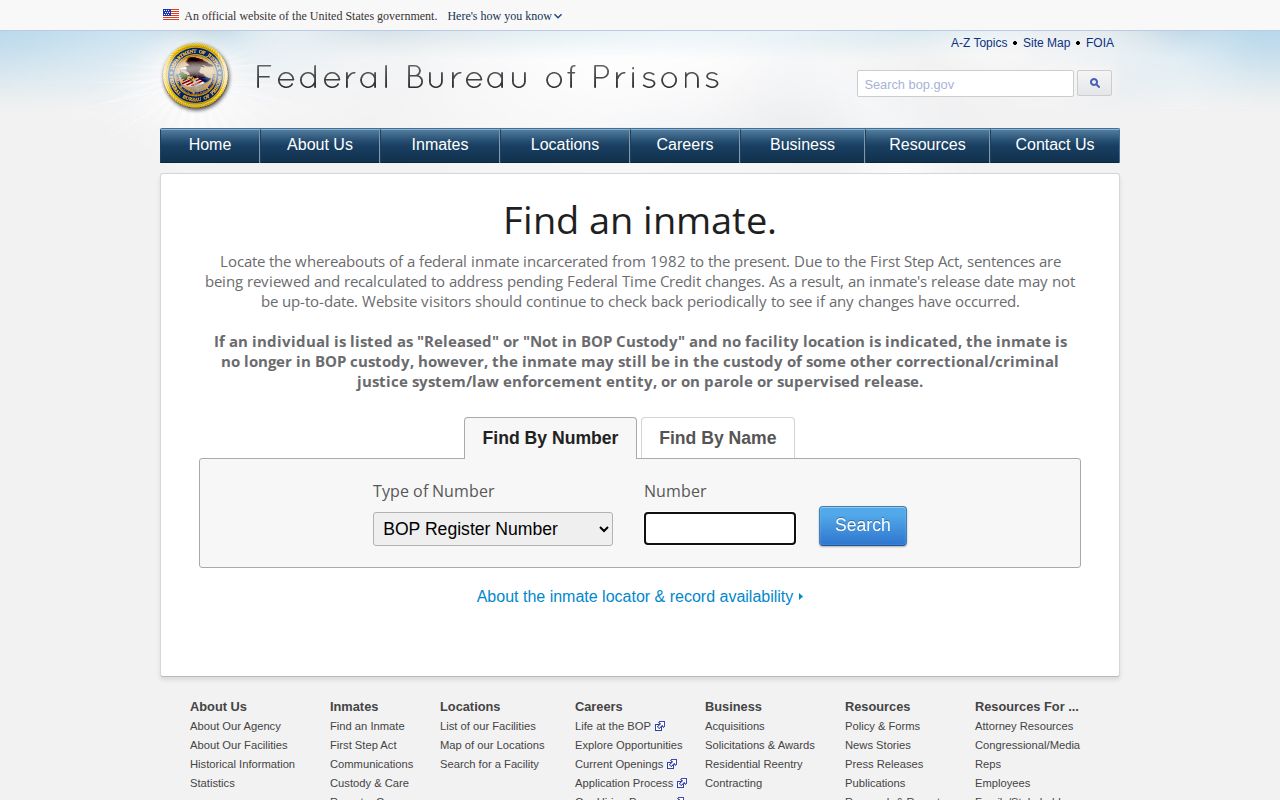
Use the live locator for a current retrieval. The image illustrates the fields and language, while the matched register number and dated result provide the evidence for one person.
Federal Release Evidence Chain
A strong record chain begins with the event that placed the person in federal custody. For a Real County arrest transferred to USMS, retain the Sheriff's disposition and transport information. Add the federal detention order and contract-jail intake. If BOP designation followed, add the register number, institution history, status, and actual release date.
Finish with the destination. Community release should align with a court order and facility gate record. Supervised release should align with the judgment. State or county transfer needs a receiving-jail intake. ICE transfer needs ODLS or ERO follow-up. If records conflict, compare timestamps and ask each custodian for its code legend rather than guessing what an abbreviation means.
This method separates four distinct claims: Real County custody ended, federal pretrial custody ended, BOP custody ended, and all confinement ended. Sometimes they occur on different dates. Reporting each precisely is more useful than assigning one broad “released” label.
Federal Locator Gaps
When no BOP match appears, verify the identifier and spelling. A current USMS detainee may not yet have a BOP history, and an older federal record may require archival research. Ask the federal clerk for the detention order and identify the actual jail. Absence from BOP cannot establish release.
When a release date appears without an institution, retain the register number and request the incarceration path through BOP FOIA. The releasing institution may hold final movement and destination records. If the judgment imposes supervision, the federal probation office named by the court becomes the status source after prison exit.
Compare every federal result with the Real County custody link. A local transfer time, federal intake, court order, and final exit should form a coherent sequence. If they do not, ask whether an entry reflects transport, designation, data entry, or physical release before drawing a conclusion.